If you feel like your back has never been the same since having children, you are not imagining it — and you are certainly not alone.
When you walk into a GP surgery or clinic with postpartum back stiffness, you are almost always met with the exact same dismissive advice: "Just rest, take paracetamol, and wait for it to settle." Or perhaps you're handed a faded, 30-year-old NHS photocopy containing three generic stretches that actually make your spasms worse.
So you try private alternatives. You book an £80 osteopath or chiropractor appointment. They crack your back, massage your glutes, and you leave feeling lighter. But 24 to 48 hours later? Your back seizes right back up into the exact same painful spasm.
THE DANGER OF PALLIATIVE CARE
Heat packs, pain pills, and weekly adjustments are purely palliative care. They temporarily soothe nerve endings, but they do nothing to restore deep muscular stabilization. The grave danger of not actively strengthening your back is that you become trapped in an endless cycle of palliative dependency — while your deep stabilizing muscles continue to atrophy, leaving your spine more vulnerable with each passing year.
“Your body is not broken. It's not your fault. The advice that is out there is simply not fit for the reality of being a busy mum.”
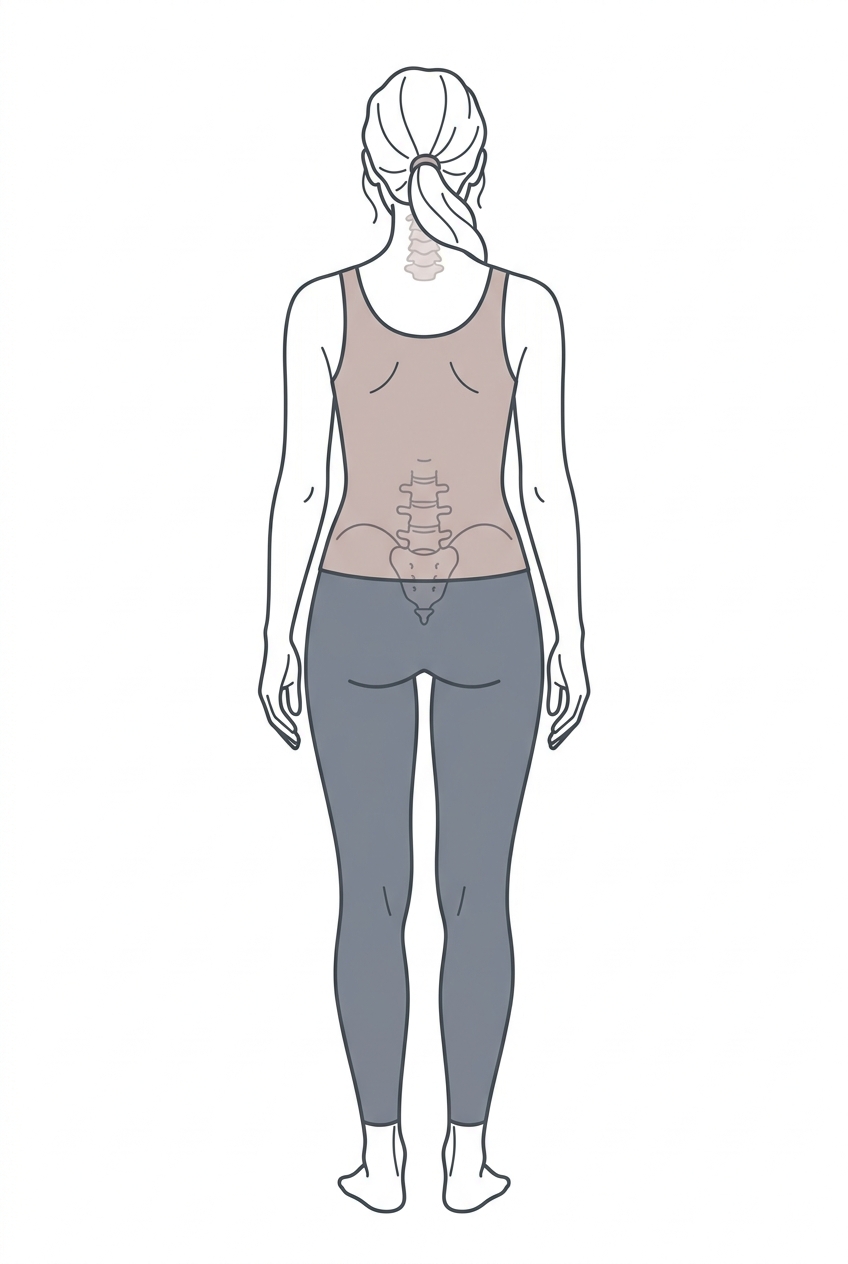
Here is what nobody explained to you after childbirth: during pregnancy, your body flooded with the hormone Relaxin to soften your pelvic ligaments and prepare you for birth. At the same time, your expanding bump stretched your deep abdominal wall (the transverse abdominis) and pulled your pelvis into an exaggerated anterior tilt.
Then, the moment your baby was born, your physical workload skyrocketed. You were suddenly lifting 10kg car seats with one hand, nursing in awkward hunched positions for hours on end, carrying toddlers perched on one hip, and surviving on broken sleep — all while your ligaments were still loose and your natural core corset was switched off.
Standard fitness classes tell you to do crunches, burpees, or heavy planks — which flare up vulnerable lower backs immediately. But doing nothing leaves your spine unprotected.
We need to wind back the clock to how you felt and moved before you had kids. And the only way to reverse that process is through thoughtful, orthopaedically adapted exercise that meets your body exactly where it is today.